

MORAL MAZE

24 May 2026
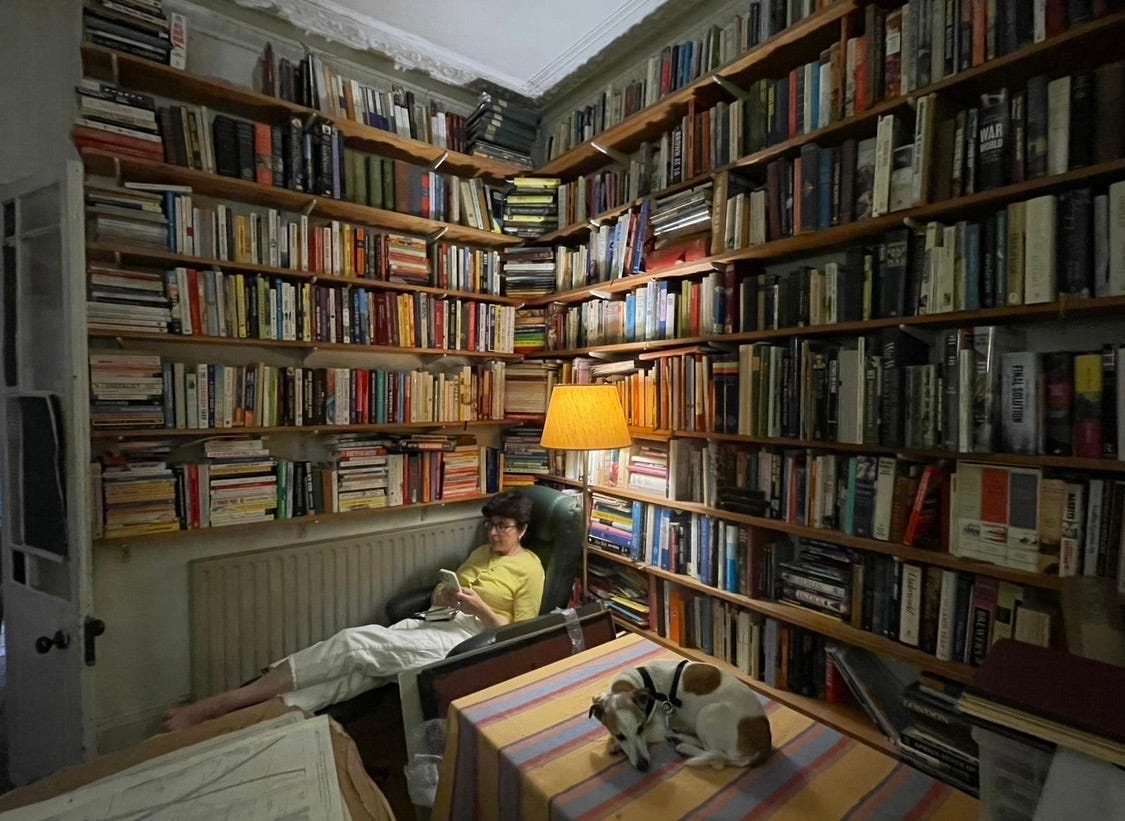
I’m not exactly making Hay while the sun shines but a good grief distraction is preparation for a live recording shortly of the BBC Moral Maze on the topic of networks.
Here is me last week prepping. Eagle eyed viewers will note. I'm scrolling on my phone.
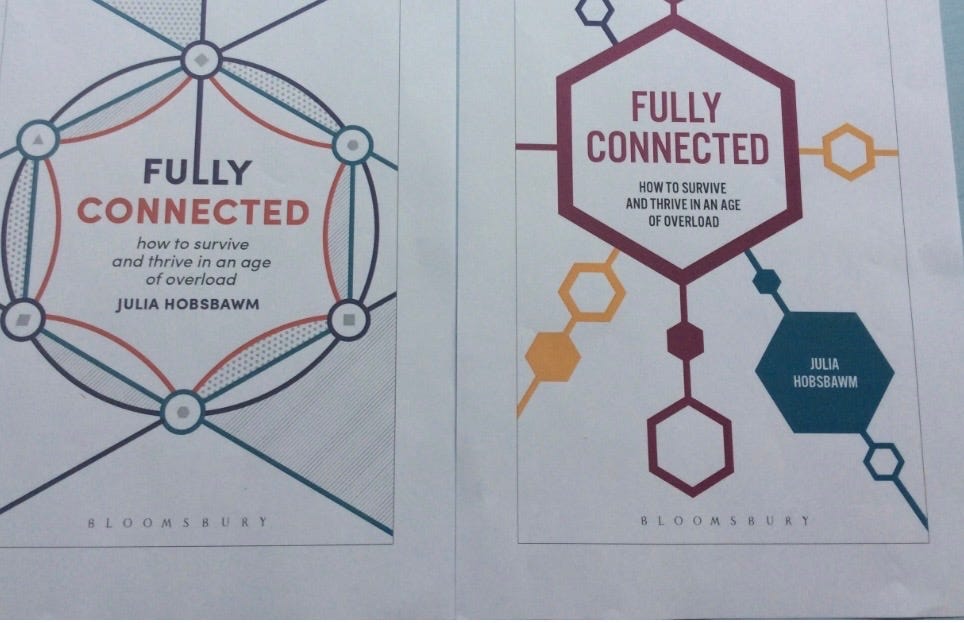
The attention crisis of what I called “Social Health” was in the book which was arguably a catalyst for my invitation: networks are back in the news.
I'm distracting myself from grief with client work and reworking a tenth anniversary edition of my book Fully Connected and I reproduce for you now the preface which is, unfortunately timely: Ebola is back and it’s a grim but good reminder of what networks are so much more intrinsic to society than the idea of elitism or just working the room.
Fully Connected : Preface
Published 2017
The spreading rate
One spring day in 2014, a young woman called Louise Kamano walked to the river from her home near the town of Guēckēdou in a corner of Guinea, in equatorial West Africa. Bad things were happening to people around her and she was scared. She crossed the river Moa by water taxi. No-one stopped her at the border. This land was full of crocodiles and AK47s, but Louise had something more dangerous to contend with. Although she had no visible possessions with her, something was concealed within her body – something she did not realise or understand. As she stepped out of her dugout canoe and onto dry land in neighbouring Sierra Leone, she unwittingly brought one of the deadliest communicable diseases known to humankind into a nation with a population of six million people. Louise Kamano was infected with Ebola.
From one nation to another: in total six West African countries would lose 11,000 people between them in the space of a single year to Ebola.1 The disease carried across connected borders by people just like Louise. A local blog in Guinea put it like this: ‘The muddy streets and shoddy buildings should not obscure the fact that towns like Guēckēdou are cosmopolitan, where people from all over the region plug into the global economy. Traders from a mosaic of ethnic groups and nationalities shuttle back and forth across borders.
Society is underpinned and connected by a mosaic of networks. We do not even notice them most of the time. Networks are the structures – animal, plant, machine and human – that carry everything from gossip to megabytes, timber to telecommunications. And illness.
The network physicist Albert-László Barabási analyses the components and characteristics of different types of networks. He calls the kind which begins to replicate exponentially from many hubs and nodes simultaneously, quickly spiralling out of control as a ‘scale-free network’. Ebola operates like this. So does another kind of network altogether – the internet.3 For physical and virtual epidemics, as Barabási puts it, ‘in scale-free networks, even if a virus is not very contagious, it spreads and persists’.4
In close-up, a highly-magnified picture of EVD, or Ebola virus disease, looks strangely beautiful. The diseased cells form clusters of blue and pink, tightly wound together in overlapping, porous, sticky clumps. These cells give rise to high fever, intense vomiting, diarrhoea, bleeding and damage to the central nervous system. The body reaches peak contagion in the final days before, during and immediately after death. The incubation period is up to 21 days. Epidemiologists refer to what happens to others during this incubation period as the ‘diffusion’ or ‘spreading rate’. Roughly half of the people infected with Ebola survived. Louise Kamano was one of them. But in surviving, she wreaked havoc on those around her.
Criss-crossing home and rejoining her family network, Louise Kamano is thought to have passed the illness to the respected local healer, Finda Nyuma, who succumbed and later died. The funeral was very well attended. People came from far and wide. The ritual in West African communities such as those in Guinea is to wrap and caress the body, to touch and kiss it, and send it safely on to the afterlife. Rituals, as sociologist Richard Sennett reminds us,‘transform objects, bodily movements or bland words into symbols’.5 Funerals, the most potent symbol of connection, lit the touchpaper for Ebola’s spread and are a reminder of what fully connects us in life and at death: love.
Human networks survive and thrive on information spread. Bad communication and miscommunication can prove deadly. The World Health Organization was famously slow to heed the warning bells being rung repeatedly and bravely by the smaller, more agile charity Médecins Sans Frontières, which urgently called for field hospitals, quarantine, soap and hydration (there was no vaccine). Their early warnings were all but ignored. WHO later tried to catch up but for many it was too little, too late.
Regional politicians also fatally mismanaged and miscommunicated with others – and with themselves. It is believed that Louise was on a list of people exposed to Ebola but that the authorities did not quarantine her. They were looking at the bigger picture – how would it look to the outside world if they shut themselves off? These were some of the world’s poorest countries, desperate to show an ‘open for business’ face to the world. Not understanding that some who appeared well were in fact incubating the virus, they reasoned wrongly. They decided not to count her at all. Louise herself was running away because everyone in her village mistook the Médecins Sans Frontières volunteers in their protective clothing as white witchcraft. This falsehood accelerated through the community as fast as Ebola itself.
Network effects and lessons apply everywhere. While Louise Kamano was superspreading Ebola, over 5,000 kilometres away in England the iconic British singer Kate Bush was doing something structurally similar – with music. The famous but reclusive singer put tickets for ‘Before the Dawn’, her first shows in thirty-five years, on the internet. Every single ticket had sold out in fifteen minutes. The effects of a scale-free network spread the word of these rare tickets like wildfire. Kate Bush said, unironically, ‘I’m completely overwhelmed’.6 There are other connections to be made about network behaviour and spread. In Belgium and France, a network of terrorist instruction began to move through a prison system and out into society with a force that erupted on the streets of Paris and Brussels in 2015 and 2016, overpowering authorities with its scale and depth. Barely visible to the naked eye, almost undetectable by political institutions, they are lethal if they are not tracked or stopped.
Culture, disease, ideas: they all operate on networks. The connective tissue is spookily similar. When they reach epidemic or endemic levels, we call this, thanks to social observer Malcolm Gladwell,‘the tipping point’. But how do we un-tip the wrong kind of spread? How do we to recognise connection and its discontents and know what to do? How can we have more of healthy connectedness and less of what harms us?
This book takes health itself as a metaphor for how we manage the spread and containment of modern connectedness. Putting the right kind of behaviour around what we do on networks, using our knowledge, and acting fast enough or slow enough, makes a big difference. In our bodies, in our societies, in our social systems.
The practices that enable us to connect the right knowledge with the right people at the right time I have called ‘Social Health’. There was undoubtedly poor physical health in West Africa in 2014, but we can easily see how this was exacerbated and inflamed by poor Social Health too. What made Ebola spread from the relative confines of a remote village to the populous towns and cities is not just a cautionary tale about contagion. Ebola is the metaphor for our times: we are connected by social ties, by travel, by politics, by ritual and custom, by fear and by love. We are fully connected. What next?
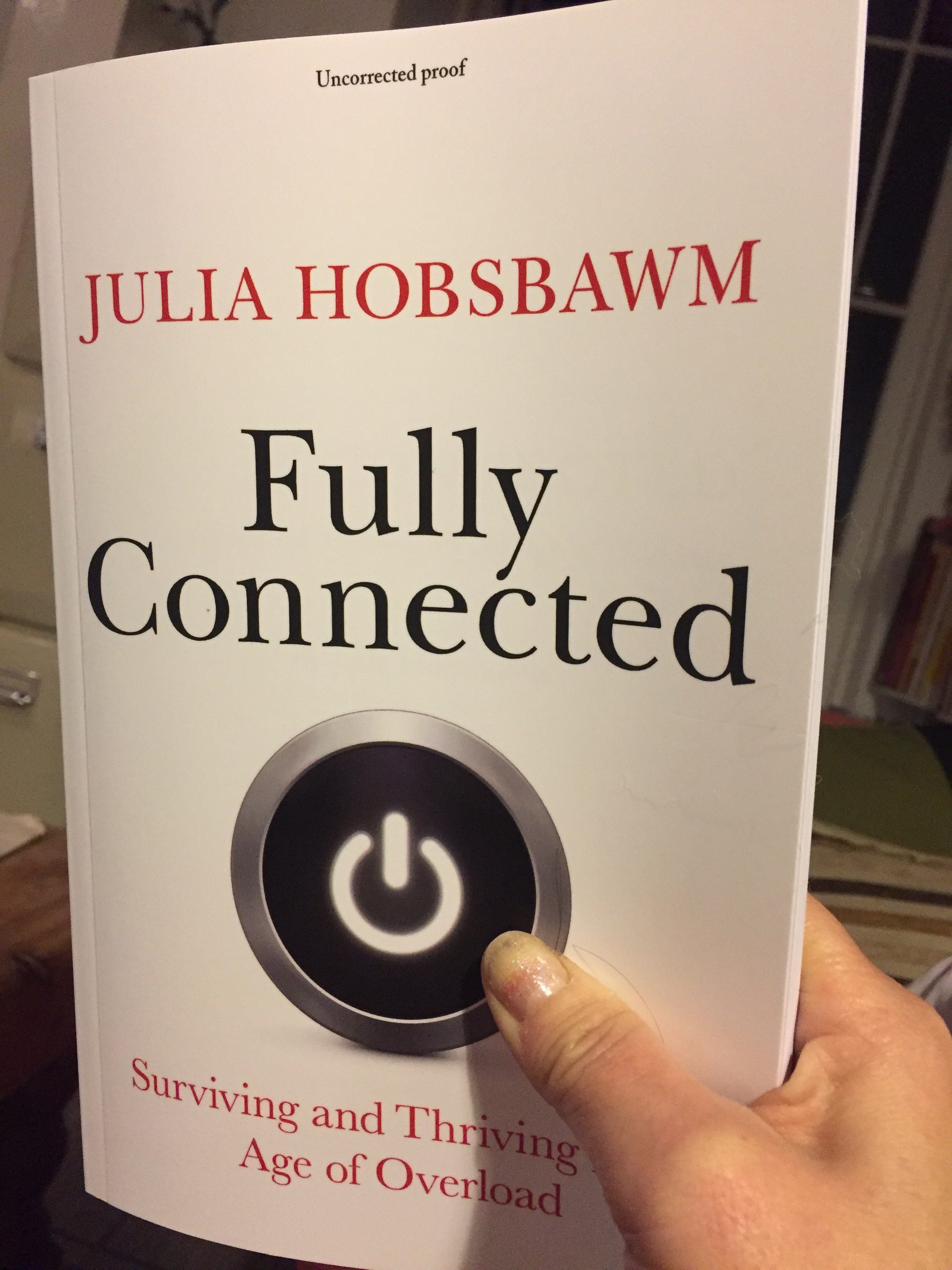
Love the home library and plan to buy the revised edition when available!