

PAST & PRESENT

A quarter of the workforce are likely to be experiencing loss in any year, fused forever with our fading past.
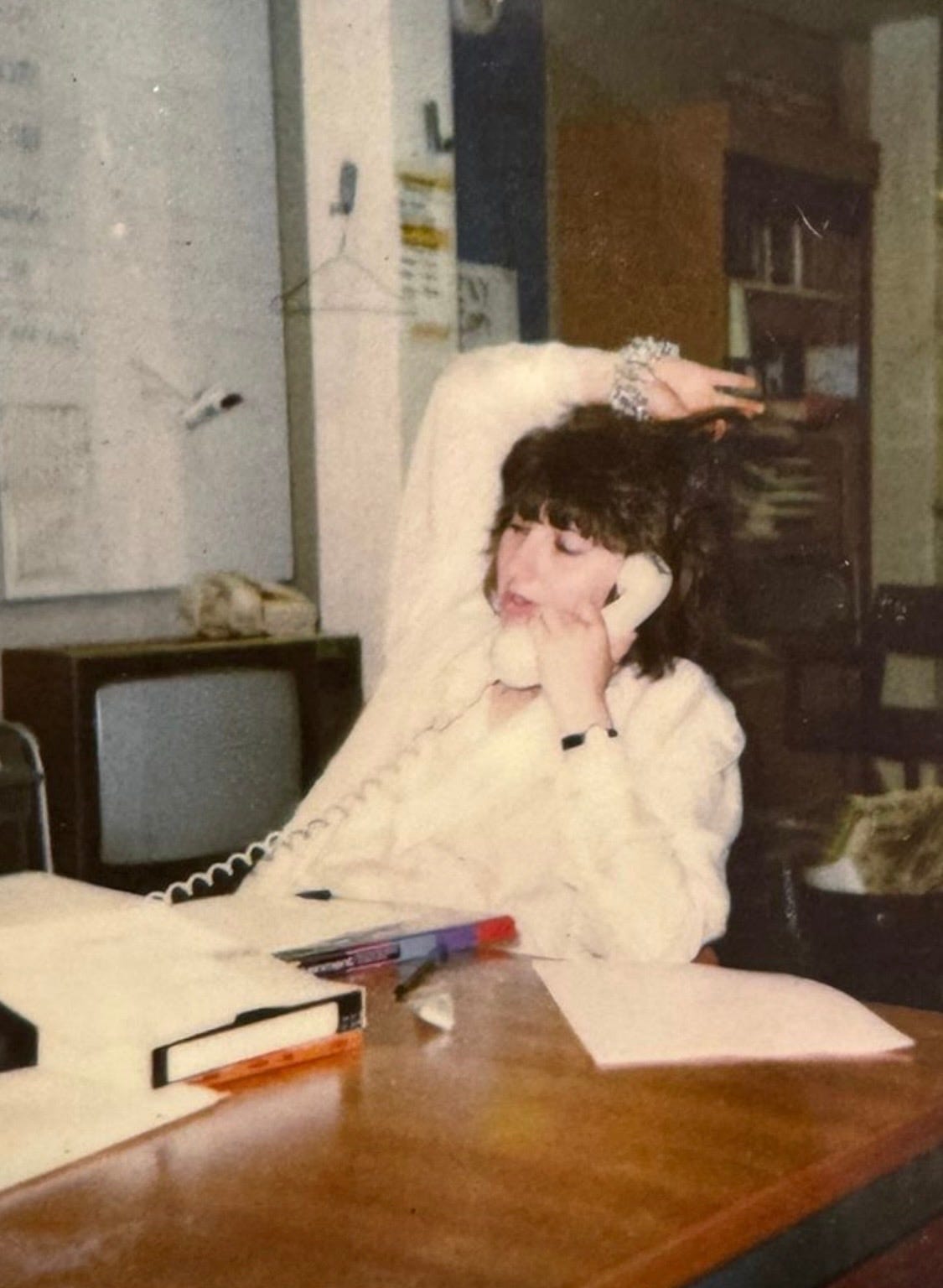
And no, I don’t mean the existential angst about jobs and desks and the white collar world turned upside down (and yes that’s a corded phone from the 1980. I miss it!)
Nor do I mean the rapid sob which bubbles up between meetings when a sudden memory of my husband and our past tense life collides with “workflow” demands. (I need to address this terrible word one day soon).

I mean this: Suddenly working life is happening in a new and unexpected land which I call, (entirely paraphrasing Susan Sontag) The Kingdom of the Bereaved.
All of this newness and strangeness and integrating into a foreign land reminds me of teaching executive MBA students at Bayes Business School (when it was called Cass) a decade or so ago: instead of being able to focus on the learning, they were floored by things like how to get broadband installed or how to know where to go for medical advice.
I recall looking at the students from Saudi Arabia, China - all the places where the story was “British allure and British education makes you new and marketable” and thinking: these people are lost and invisible in the place that matters: their lives.
Bereavement policies focus on time off and that’s welcome but co-workers who experience loss need more than this.
Much more.

In the Kingdom of the Bereaved there is a subset. 10-15% are likely to be in what academics call PGD or “Prolongued Grief Disorder”.
“There are people who say, well, if you're still grieving after X amount of time, then you have a disorder. Yes, I do. And I'm really proud of it.
And I thought that etymology of disorder, dis from the Latin means opposite, dis-ease or disagree or what have you. And so disorder, I am out of order.”
From All There Is with Anderson Cooper: Rachel and Jon Goldberg-Polin: ‘ Grief is a Badge of Love’, 22 Apr 2026
Although we may not be living with a death as grotesque and violent as Hersch Goldberg-Polin’s, i’m discovering that every death is not a hierarchy but a spectrum ranging from invisible loss - a friend bereaved in childbirth who was never able to introduce her son to the world but who loves him and lives with him as surely as she does her other two children - to those where unfathomable layers of complexity compound the loss: another friend whose husband died mid-air.
In all cases we work. That means people you work with - are disordered by loss, working through and and alongside a new reality.
We can do better to work with people grieving and as a society to talk about death.
It is our co-worker after all.